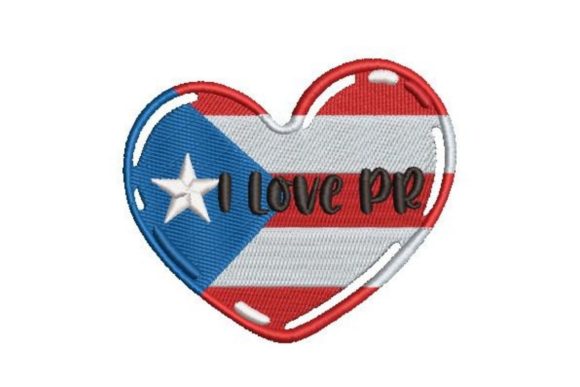
I Love PR Embroidery Design Review for Craft Fair Success
As an embroidery designer preparing for a weekend craft fair, my first task is to review potential designs through a practical lens. I’m looking at I Love PR not just as a digital file, but as a future product on a crowded table. The description notes it is carefully designed with great details and comes in multiple embroidery file formats, which is a solid start. The title itself evokes a clear, positive sentiment—it’s bold, declarative, and feels both modern and heartfelt. My initial impression is that this design leans towards a decorative, premium, and engaging aesthetic. It’s not overly rustic or minimal; it feels designed to connect.
Where I Love PR Stands Out in a Booth Display
When planning my booth, I imagine a mix of tote bags, aprons, tea towels, caps, patches, and pillow covers. A design like I Love PR needs a home where its message shines. On a tote bag or a market bag, it becomes a statement piece—something a customer carries proudly. Embroidered on a crisp white tea towel or apron, it transforms a simple kitchen item into a giftable, conversational piece. As an embroidered patch, it offers versatility, allowing buyers to apply it to their own items. The key is that the sentiment is universal enough to attract attention but specific enough to feel special.
In a crowded craft fair, products with clear, positive messages tend to catch the eye quickly. I Love PR would likely stand out on darker fabric backgrounds where the thread contrast is high, or on classic natural linens for a softer, handmade quality. On a cap, the curved surface requires a design that isn’t too densely stitched in one area, so evaluating the stitch density of this design before production is crucial.
Practical Performance on Key Products
Let’s break down how I Love PR might perform on specific craft fair products.
Tote Bags and Aprons
These are often best-sellers. For a tote, this design could work beautifully as a large focal point centered on the front. Its “great details” suggest it has the complexity to justify that space. For an apron embroidery, placement is key—chest or pocket area. The design needs to be easily understood at a glance; a customer should grasp the message without squinting. If the lettering is too small or intricate, it loses impact on a moving, textured canvas like an apron.
Tea Towels and Pillow Covers
These items sell on visual appeal and comfort. I Love PR on a pillow cover creates a cozy, sentimental home decor item. On a tea towel, it elevates a utilitarian object. However, fabric texture matters here. Terry cloth or textured towels can swallow fine details. A test run on scrap fabric is mandatory to see if the “great details” remain crisp.
Caps and Patches
Caps are tricky. The curved, structured surface demands a design that accommodates the shape. Small, dense lettering can puckered. If I Love PR is intended for a cap, checking the recommended hoop size from the design files is essential. As a patch, it’s a fantastic small shop product. Patches are low-cost to produce, high-value to sell, and perfect for impulse buys at a fair. They also photograph excellently for Etsy listings.
Production Considerations for Batch Selling
When I’m producing items in batches for a fair, efficiency and consistency are everything. I evaluate a design for its repeatability.
First, I must confirm the embroidery file includes formats compatible with my machine and that the design is licensed for commercial embroidery. The description says it comes with multiple formats, which is good, but I always verify this before any production run.
Thread colors and stitch density directly affect production time and cost. A design with many color changes or extremely dense stitching takes longer and consumes more thread. While “great details” often mean more stitches, they can also mean a richer, more valuable-looking finished product. The trade-off is worth it if the final item looks premium.
I always create at least one real mockup. For I Love PR, I would stitch it out on a mid-weight cotton (like a tote bag fabric) and a textured linen (like a tea towel). This tests the need for different stabilizer types and reveals any potential issues with tiny details or small lettering losing clarity. A design that looks perfect on a screen can sometimes be a nightmare on fabric if the details are too fine.
Photography and Online Sales Potential
For my Etsy seller side, and even for creating printable mockups for my fair table signage, how a design photographs is critical. I Love PR, with its positive message, should photograph well. Clean, contrasting colors against a simple background will make it pop in online listings. It’s also a design that could easily integrate into other design assets for my brand, helping with brand consistency across products.
Final Designer Notes Before the Fair
My review culminates in a practical checklist. For I Love PR, my notes would be:
- Test on scrap fabric first. Use both light and dark fabrics to check thread contrast.
- Review the design spacing. Ensure elements aren’t too close together, which can cause stitching issues.
- Confirm the hoop size required. Does it fit a common size like 4x4 or 5x7 for efficient batch production?
- Inspect stitch density in detailed areas. Dense areas on thick fabric like caps or terry towels may need adjusted tension or stabilizer.
- Create a real, physical mockup for your booth. A sample tote bag or pillow with I Love PR embroidered on it is the best sales tool.
- Compare fabric colors. This design likely shines on a spectrum from bright white to deep navy. Have a range in your booth.
- Confirm commercial licensing. Never assume. The ability to sell the finished product at a fair or online hinges on this.
In the context of North America and its craft markets, a design like this, falling under the Embroidery category, has strong potential. It speaks a positive, simple language that resonates in a handmade, face-to-face selling environment. Its value isn’t just in the stitches, but in the feeling it conveys when a customer sees it on a product. That’s the magic we’re looking for when turning a digital file into a successful handmade product.