From Digital File to Craft Fair Sales: Reviewing 40 and Happy Lettering
As an embroidery designer preparing for a weekend market, my first task is always to evaluate a new design file like 40 and Happy Lettering through a practical lens. It’s not just about whether it stitches cleanly; it’s about whether it will sell from my booth, attract customer attention in person, and be efficient to produce in batches. Let’s break down this birthday-themed embroidery design for handmade market products.
The First Impression: Bold, Friendly, and Unmistakably Festive
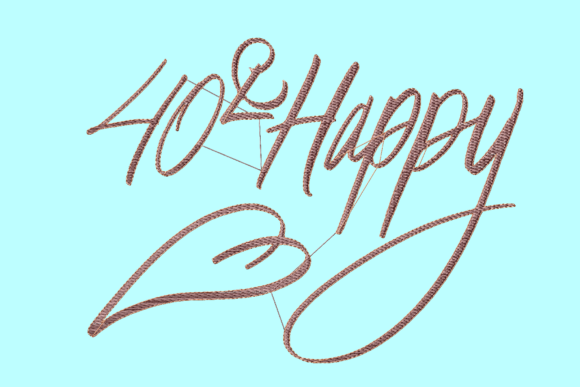
The title 40 and Happy Lettering immediately sets a clear, celebratory mood. The design feels bold and friendly rather than overly elegant or minimalist. This is a strength. At a craft fair, customers scanning a table need to understand a product’s purpose within seconds. This design communicates “40th birthday celebration” instantly. Its style leans modern and decorative, with enough visual weight to stand out on a crowded display. It doesn’t feel overly cute or rustic, which gives it flexibility—it could work on a premium linen tea towel or a casual cotton tote bag without seeming mismatched.
Where It Stands Out: Product Application Review
My booth typically features a range of embroidered goods: tote bags, aprons, tea towels, caps, patches, pouches, and pillow covers. I mentally test 40 and Happy Lettering on each.
Tote Bags and Market Bags
This is a prime candidate. The lettering’s bold nature makes it a strong focal point on a bag’s front panel. It reads well from a few feet away, which is crucial when bags are hung on a display rack. On a solid-color canvas bag, the design would pop, instantly elevating a simple bag into a personalized gift.
Aprons and Kitchen Towels
For aprons and tea towels, the celebratory accent fits perfectly. Birthdays often involve cooking and gatherings, so these are natural product pairings. I’d likely position it on a towel’s lower corner or an apron’s chest pocket area. The “happy” sentiment adds a cheerful touch to a practical item, increasing its perceived value as a handmade gift.
Caps and Embroidered Patches
Caps require careful consideration due to curved surfaces. The design’s density and potential stitch count must be checked for compatibility with cap hoops. As a patch, however, 40 and Happy Lettering could be excellent. A standalone embroidered patch allows the customer to apply it to their own item, adding versatility to your product line.
Small Pouches and Pillow Covers
For smaller items like zipper pouches, the design might need to be scaled down. One must watch for tiny lettering details losing clarity. On a pillow cover, it would serve as a decorative, festive accent, especially if paired with complementary fabrics. It’s more of an accent here than a massive central graphic.
Practical Production & Selling Points
Turning a digital embroidery file into profitable craft fair products involves a series of real-world checks.
Clarity at a Glance and Batch Production
A key selling advantage of this design is its quick readability. Customers don’t have to study it. This is vital for busy markets. From a production standpoint, a clear, bold design like this is often more repeatable for batch production. If the stitch density is manageable and the hooping process straightforward, stitching ten tote bags in succession becomes efficient. Always test the design on scrap fabric first to gauge actual stitch time and thread consumption.
Photography for Online Listings
For Etsy sellers and small shop owners, how a design photographs is critical. 40 and Happy Lettering, with its strong message and likely good contrast, should photograph well for online listings and printable mockups. Photograph it on a neutral background first to highlight the embroidery itself. The “40” provides a strong keyword hook for birthday-related searches.
Fabric and Thread Considerations
The description says “stitch it on any fabric,” but a designer’s experience adds nuance. On textured towels or thick fabrics like denim, stabilizer choice becomes paramount to maintain clarity. For dark fabrics, ensure your thread color palette offers enough contrast—a bright, happy color scheme is implied. Always check thread contrast and review spacing on your actual production fabric before committing a whole batch.
Careful-Use Notes for the Embroidery Crafter
Even a high-quality embroidery design has practical limits that affect final product quality.
- Scale and Clarity: If you plan to reduce the size for a small pouch or cap, inspect the stitched sample closely. Small lettering and dense stitch areas can become muddy or lose definition.
- Stitch Density: High density can cause puckering on lightweight fabrics and may require additional stabilizer testing. It also uses more thread and time.
- Hoop Size: Confirm the design’s maximum dimensions and required hoop size from the file details before planning your products. A design meant for a 5x7 hoop might not fit a 4x4 cap hoop.
- Commercial Licensing: As a digital embroidery file, always confirm the commercial use license terms before selling finished products at a fair or online. This is a fundamental step for any creative entrepreneur.
Boosting Booth Display and Buyer Engagement
At the craft fair itself, products carrying 40 and Happy Lettering can play a specific role.
It’s a niche design with a clear target audience—someone shopping for a 40th birthday gift. This focus can be a strength. Display it prominently among other birthday-themed items to create a thematic section in your booth. A real, physical mockup—an embroidered tote bag or apron—hung at eye level will draw attention far better than a digital mockup on a screen. The handmade quality of the embroidery adds tangible value, making the item feel special compared to mass-produced alternatives.
For buyer engagement, it’s a conversation starter. You can easily discuss it as a perfect, personalized gift. Its quality execution (clean stitches, good fabric choice) reinforces your brand consistency as a skilled maker. It shows you offer specific, celebratory designs, not just generic patterns.
Final Designer Notes Before the Fair
My last steps before loading this design into my machine for production would be:
- Create at least one real, physical mockup on the intended product (e.g., a tote bag). This reveals any unforeseen issues with fabric texture or design placement.
- Compare fabric colors to thread choices. Does “happy” lettering need bright yellows and pinks, or a more sophisticated palette? This affects the product’s final mood.
- Inspect stitch density on the mockup. Is it smooth and flat, or does it pull the fabric? This dictates stabilizer use for every subsequent item.
- Plan the booth display. Where will these items sit? Perhaps grouped with other birthday-year designs for a stronger visual impact.
40 and Happy Lettering presents a solid opportunity for craft fair sellers and embroidery business owners. Its bold, festive message translates well to popular handmade products like tote bags and tea towels. By paying attention to the practical embroidery details—fabric, stabilizer, scale, and licensing—you can transform this digital embroidery file into a series of profitable, attention-grabbing finished products that truly celebrate the occasion. Now, it’s time to hoop the fabric and stitch the first sample.